
Pasta isn’t really too difficult to make, but somehow I hardly ever get around to it. Having just made a pesto, though, it seemed fitting to have a home-made pasta with it. The result was definitely worth it!
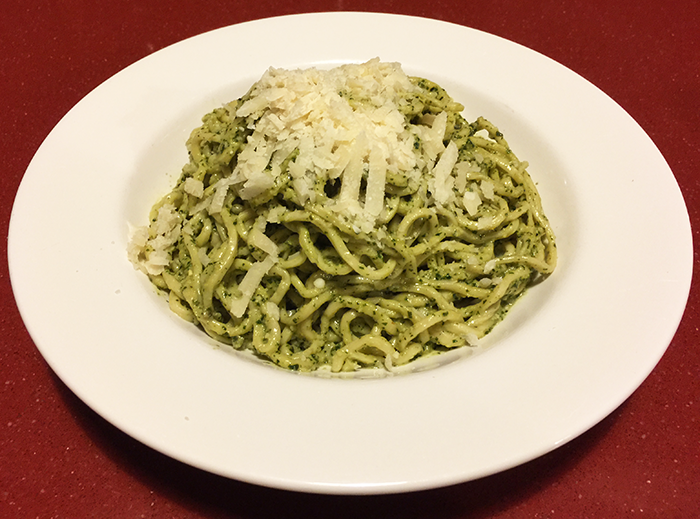
For the pesto wash a bunch of basil and make sure it’s as dry as possible. This is the secret to keeping your pesto green – too much water will make it a very dark colour. In a food processor combine the basil with ½ a cup of lightly toasted pine nuts, ½ a cup of dry-roasted cashews, a finely diced clove of garlic, ½ a cup of good olive oil and a pinch of salt. Process to a consistency you like. Remove the pesto to a bowl and add ¼ of a cup of grated Parmesan, mixing by hand. For the pasta, I chose to use my stand mixer with a dough hook. Slowly combine 350g (12½ oz) of finely milled “00” flour, ¼ of a teaspoon of salt, 2 large whole eggs and 2 teaspoons of olive oil. Mix until the dough forms into a ball. If the mixture is too dry add an egg yolk. Continue to mix on low for 10 minutes or so until you have a soft and smooth dough. Roll pieces of the dough through a pasta machine, folding the dough a few times and rolling it out before setting the machine to a thinner setting. As the pasta becomes thinner, it’s not necessary to keep folding it. Depending what sort of shape you intend to make, it’s also not necessary to make the pasta too thin. If you intend to make spaghetti, it will cut better a little thicker. As you cut your pasta, toss it in a little flour to keep it separate. When you’re ready to cook, make sure you generously salt the water and when it’s boiling, drop the pasta in and cook for 2-5 minutes depending on the thickness. When the pasta is al dente, strain it and retain some of the cooking liquid. Place the pasta in a bowl, add the pesto and some of the cooking liquid and toss to combine. You will have to judge how much cooking liquid to add to get the desired consistency. The pesto should be sticking to all the pasta. Finally, serve topped with some freshly grated Reggiano parmesan.
 michelle picker cooks