
The technique of fermentation preserves food that might otherwise spoil and in the past all hot chilli sauces were fermented. Many of the world’s most popular sauces, like Tabasco and sriracha, are still prepared using this method. The bacteria that grows during fermentation is not only good for you but it also gives the hot sauce its unique and vibrant flavour.
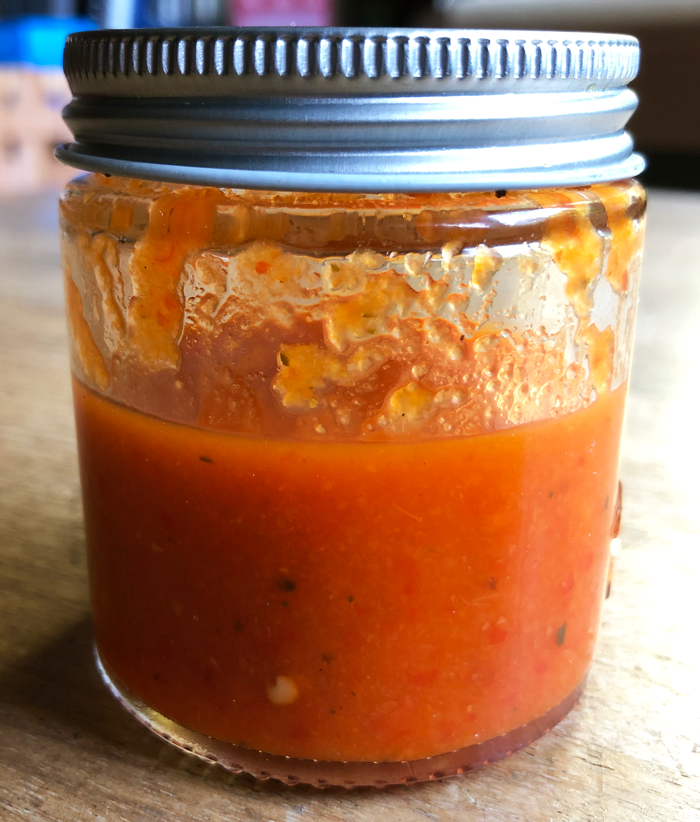
Thomas made this hot sauce with his home-grown Scotch Bonnet chillies, garlic, carrot, bay leaf and pepper.
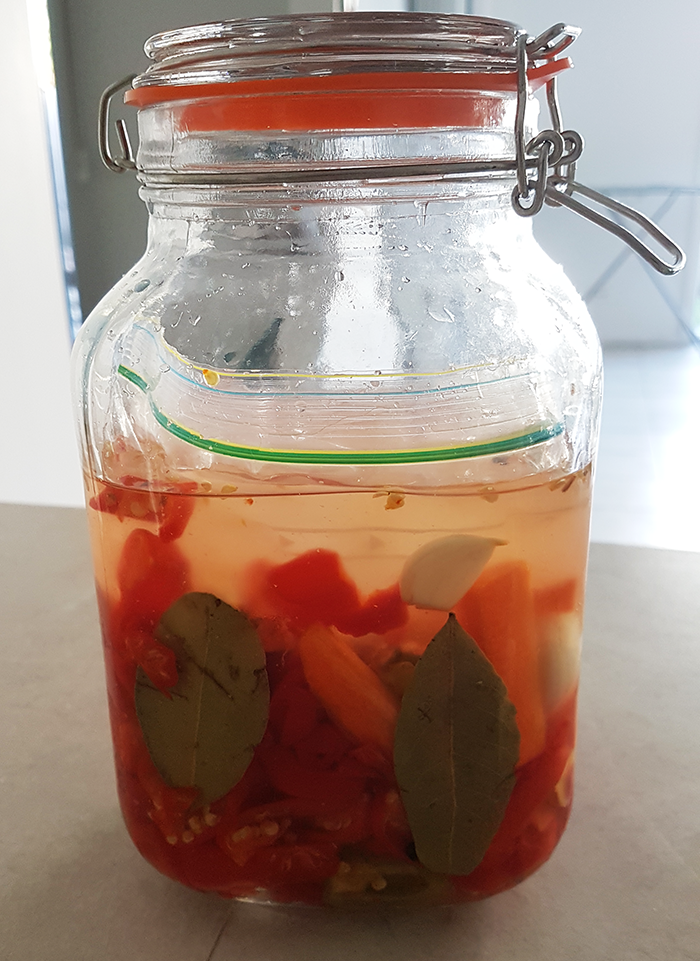
Remove the tops from the chillies and split them in half lengthwise. Pack them tightly into a large clean jar along with garlic cloves (about 6 per 1kg or 2 lbs), slices of carrot and bay leaves (perhaps 2 for the same amount of chillies) and leave some space at the top. To make the brine dissolve 3 tablespoons of fine sea salt in 4 cups warm water. When the salt is dissolved, pour the brine into the jar and weigh the ingredients down to make sure they’re submerged (a Ziploc bag filled with more brine works well). Ideally you need to allow the carbon dioxide that builds up during fermentation to escape without letting oxygen in (this can foster the growth of mould). If you don’t have a jar with an airlock make sure to open the jar regularly. The chillies will need to ferment for at least two weeks or until they smell and taste pleasantly sour. Strain the brine and reserve it. Discard the bay leaves and transfer the rest to a high-speed blender with a little of the brine. Process to a smooth, fine consistency, adding extra brine as needed. Strain the pulp through a fine-mesh sieve and bottle. At this stage you can add extra flavouring – this one has some ground allspice and thyme (traditional spices in Jerk seasoning).
The sauce is now ready to use but will continue to ferment. Keep it refrigerated to slow this process down and it should keep for up to a year.
*Thomas used this as a guide.
 michelle picker cooks