
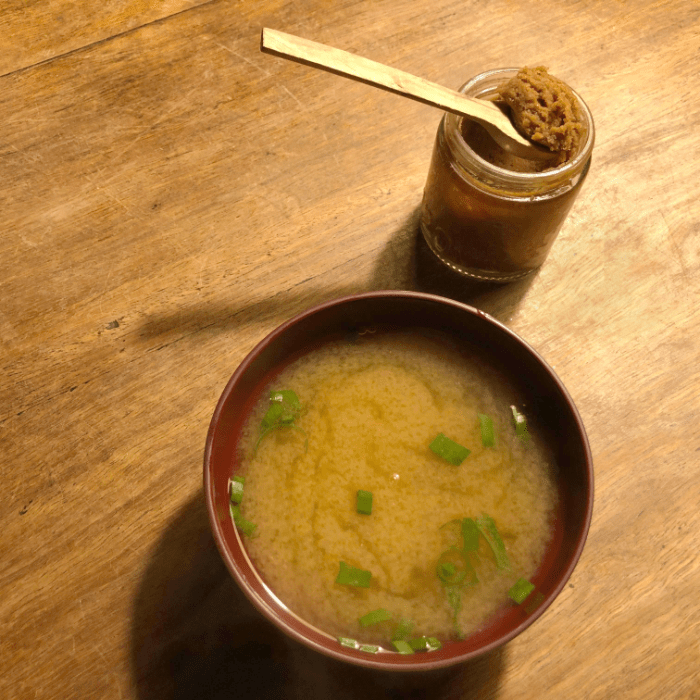
Miso is a traditional Japanese seasoning. It’s a thick paste made by fermenting a mixture of soybeans, salt and kōji rice. Koji rice is a rice cultured with the Aspergillus Oryzae fungus which is used for fermenting miso as well as sake and soy sauce. Salty with a rich umami flavour, Miso is used in Japan to make the ubiquitous miso soup as well as to flavour sauces and spreads and for pickling meats and vegetables. Methods of fermentation and ingredients can be varied resulting in different flavour profiles. Miso is quite easy to make but does require patience as it takes nine months to ferment.
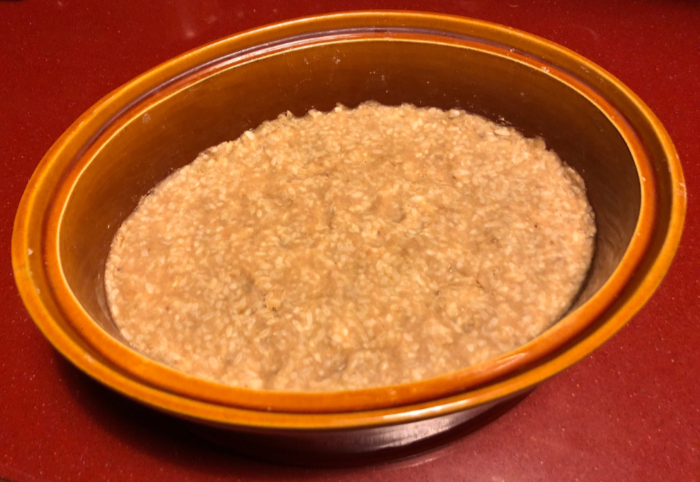
First find a covered container in which to ferment the miso. The container should have enough space for the mixture as well as something to weigh it down. Sanitise the container by rinsing with vinegar or wiping with a clean vodka-soaked cloth. To make the miso, first soak 325g (13 oz) of soybeans for 18 hours. Drain and cook the soybeans in some fresh water until soft. If you have a pressure cooker this will only take 20 minutes. Meanwhile, in a large bowl, combine 500g (17½ oz) of rice koji with 187g (6 ½ oz) of sea salt and mix well. When the soybeans are soft, drain them, retaining some of the cooking liquid, and mash them in a food processor or with a potato masher. Only add a small amount of cooking liquid if absolutely necessary. Now let the mash cool to 37ºC (98.5ºF) or lower (otherwise you will kill the koji) and then mix it thoroughly with the rice koji and salt. Sprinkle a little salt in the bottom of your fermenting container and then add the mixture, a little at a time, pressing it in and making sure there are no air pockets. Flatten the surface and wipe the inside edges of the container with a little vodka to clean and sanitise. Cover the top with plastic wrap or, if you have a cryovac machine, make a cardboard lid for the miso and seal it in plastic. Place a weight on top of the plastic and store in a cool dark place. Check the miso weekly at first and pour off any accumulating liquid – this is tamari and can also be used in cooking. If you are making miso in warmer weather, you should continue to check it often to ensure that no mould is growing. If your miso has any mould, you can remove it from the surface and stir the miso, smoothing the surface and sanitising again before covering and weighing it down. After 9 months the miso is ready to use. You may find the miso still has distinct rice grains. If you prefer you can use a food processor to make it smoother. Make sure to sanitise any jars you will be storing the miso in. You can also cryovac miso, which is handy for storage and gifting. After decanting, the miso will continue to ferment. Store it in the fridge to prevent over-fermentation.
 michelle picker cooks