
Duck a l’orange is thought to have originated in Tuscany where it was served to the Medicis. It migrated to France, perhaps when Catherine de’ Medici married into the French court, and eventually became a classic there. It was a favourite in the UK and the US in the 1960s and, although less fashionable today, the flavour combination is still excellent. The acidity of the sauce cuts through the richness of the meat and the bitterness adds depth of flavour. Instead of a traditional whole roast duck, I slightly adapted this recipe by Chef John using duck breasts.
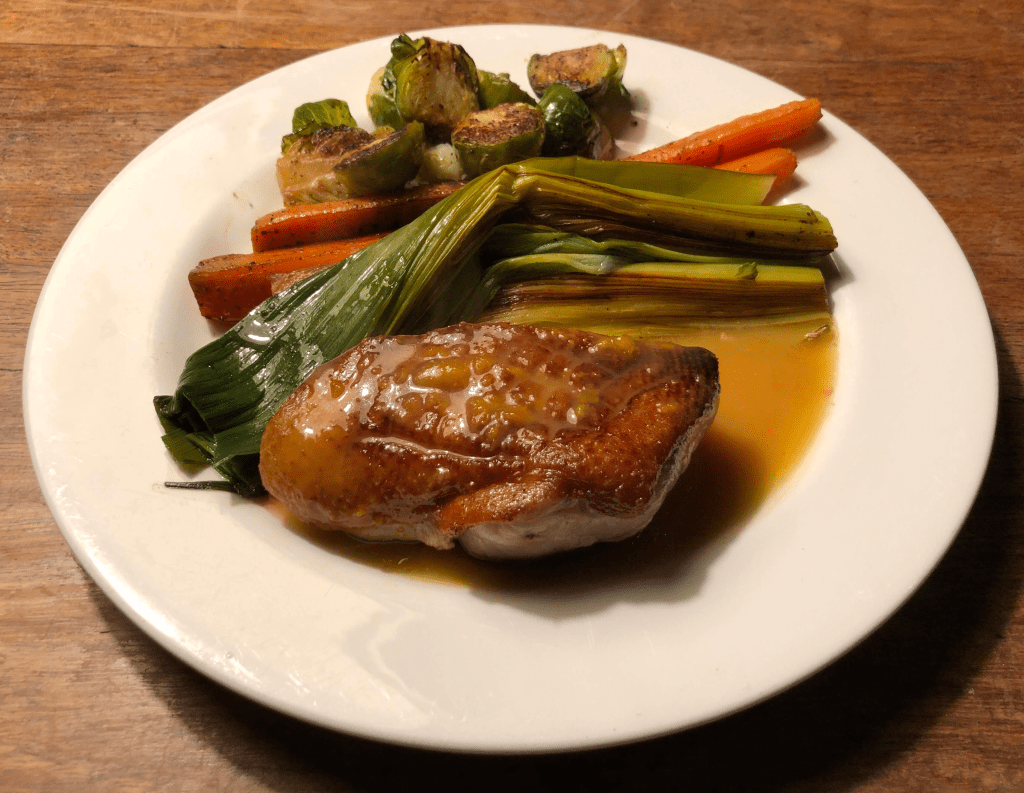
15 minutes before cooking, score the skin of 2 duck breasts in a cross-hatch pattern and rub a generous amount of salt on each. In the mean while, whisk together 1 cup of chicken stock, 2 tablespoons of orange liqueur, 1 tablespoon of sherry vinegar, 1 tablespoon of Seville orange or cumquat marmalade, 2 teaspoons of grated orange zest and a pinch of cayenne pepper. When you’re ready to cook the duck, pat the duck breasts with paper towels and re-season the skin. Place them skin side down in a cold pan and turn the heat to medium. Cook until the skin is crisp then flip the breasts briefly. The meat should be juicy and pink – if you have an instant-read thermometer the internal temperature should ideally be 60ºC (140ºF). Remove them to a plate to rest and pour off any excess duck fat – keep it for another recipe. Return the pan to the heat and stir in 1 teaspoon of plain flour and cook for about 1 minute. Add the stock and orange mixture and bring to a boil. Cook for a few minutes until the sauce thickens. Reduce the heat to low and then add 1 tablespoon of butter, stirring to incorporate it into the sauce. Season the sauce to taste and serve the duck with the sauce spooned over the top.
 michelle picker cooks