
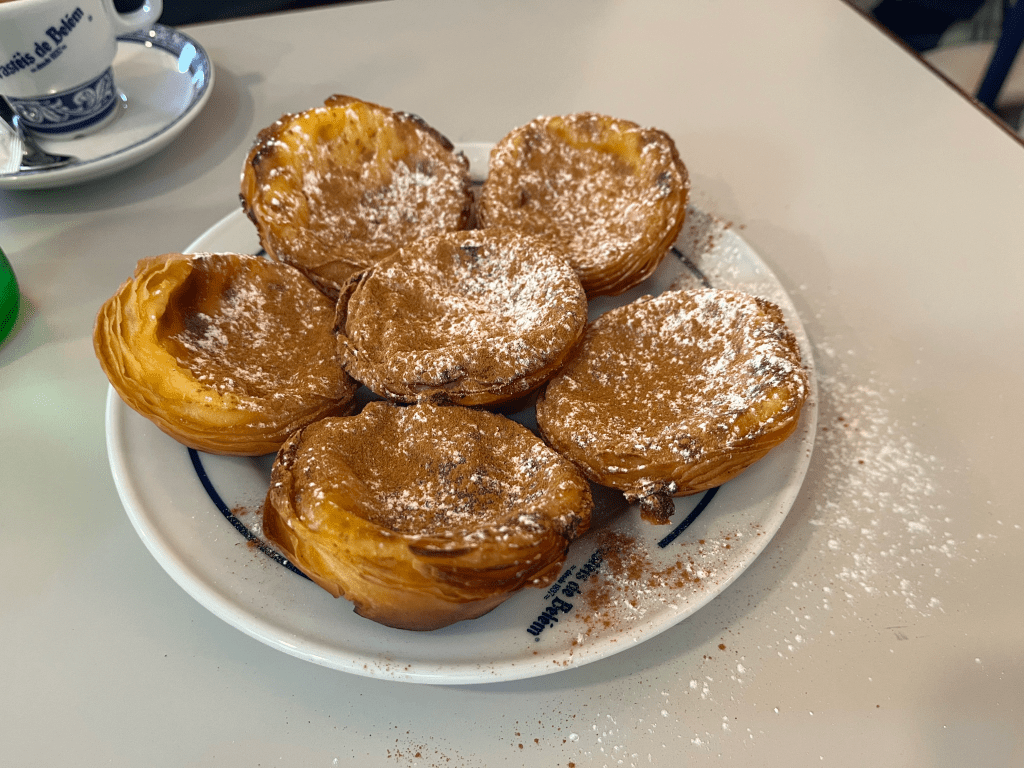
The Portuguese custard tart, pastel de nata (plural: pastéis de nata), has become a popular treat worldwide. They were created in the 17th Century by the Catholic monks of the Hieronymites Monastery (Mosteiro dos Jerónimos) in Belém, Lisbon. The monks used egg whites to starch their clothing, leaving a surplus of egg yolks which came to be used for pastries. With the dissolution of religious orders after the civil war of 1820, the monastery was threatened with closure and began to sell pastéis de nata to bring in revenue. Despite their efforts, the monastery closed in 1834 and the recipe was sold to a sugar refinery who opened Fábrica de Pastéis de Belém in 1837. Only a short walk from the monastery, Pastéis de Belém is still owned by the descendants of the same family and the pastries (20,000 a day) are still made by hand using the original ‘secret’ recipe.

The fresh pastéis de nata are usually sprinkled with cinnamon and accompanied by a bica (espresso coffee). Super crisp, flaky pastry surrounds a deliciously soft, smooth and slightly caramelised custard centre.
 michelle picker cooks