
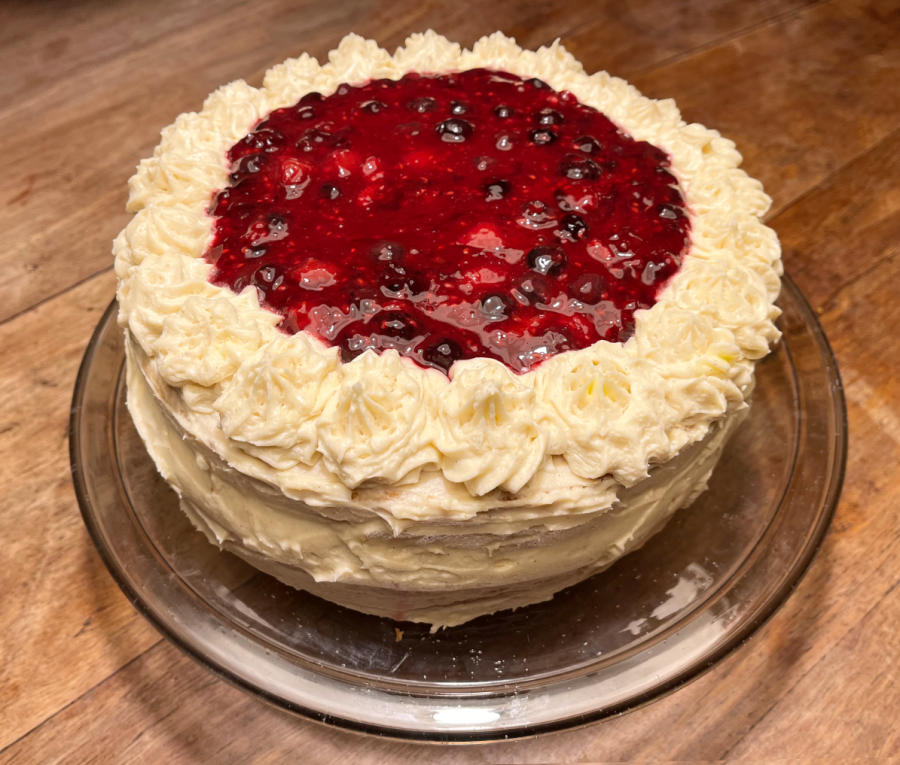
In an interview, Nagi Maehashi of RecipeTinEats said she tested this recipe 82 times! It’s a classic vanilla butter cake but has some Japanese techniques applied. The result in a soft and moist cake which will stay fresh for days. I decided it must be worth trying and I wasn’t disappointed. Cake: Preheat your oven to…… Continue reading vanilla cake with berries

roasted stuffed butternut
This stuffed and roasted butternut pumpkin (squash) is a beautiful thing to behold and delicious too! An excellent centrepiece for a vegetarian/vegan feast or as part of a celebration. Cindy cooked this one for just such an occasion. A winning recipe from the book RECIPETIN EATS: DINNER by Nagi Maehashi. Preheat your oven to 200°C…… Continue reading roasted stuffed butternut
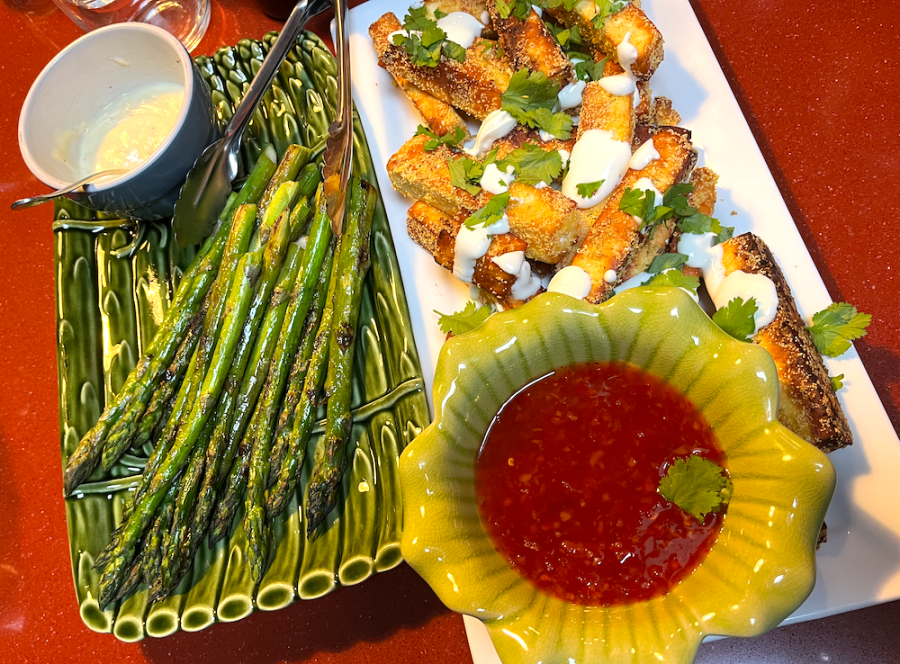
halloumi chips + grilled asparagus
Halloumi (haloumi) is a traditional Cypriot cheese usually made from goat’s and sheep’s milk or sometimes cow’s milk. Because it has a high melting point, it can easily be fried or grilled. In this recipe, from Donna Hay, the cheese is coated with polenta and baked resulting in deliciously crunchy chips. Cindy served ours with aioli and sweet…… Continue reading halloumi chips + grilled asparagus

slow roasted lamb
If you want to be prepared ahead of time, here’s a VERY slow-roasted lamb recipe from recipetineats. Fifi cooked it overnight! Mix together 2½ teaspoons of finely chopped fresh rosemary, 1 tablespoon of dried oregano, 2 minced cloves of garlic, ¾ of a teaspoon of salt, ½ a teaspoon of freshly ground black pepper and ¼ of a cup of good olive…… Continue reading slow roasted lamb
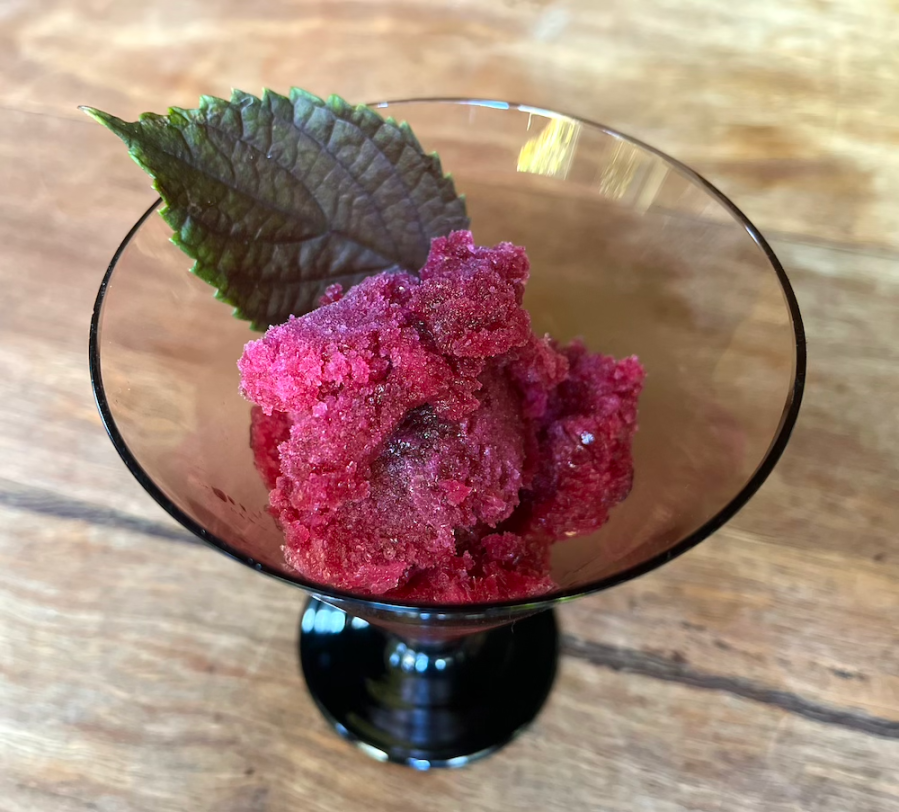
perilla (shiso) granita
Cultivated in ancient China, the herb purple perilla is known in Chinese as zǐsū (紫蘇), which is the origin of the Japanese name shiso. It’s used extensively in Japanese cuisine as well as in Korea, Laos and Vietnam. The flavour is vibrant and herbaceous and reminiscent of mint or basil, with hints of cinnamon, anise and coriander (cilantro)…… Continue reading perilla (shiso) granita

grilled lemongrass pork cheeks
Pork cheeks or jowls are fatty and delicious. You’ve probably heard of guanciale, a smoked Italian meat similar to bacon, which is made from this cut. In Thailand pork cheeks are popular marinated and grilled over hot charcoal. In a food processor combine 6 cloves of garlic, 5–6 stalks (without leaves) of coriander (cilantro), 2 tablespoons of chopped…… Continue reading grilled lemongrass pork cheeks
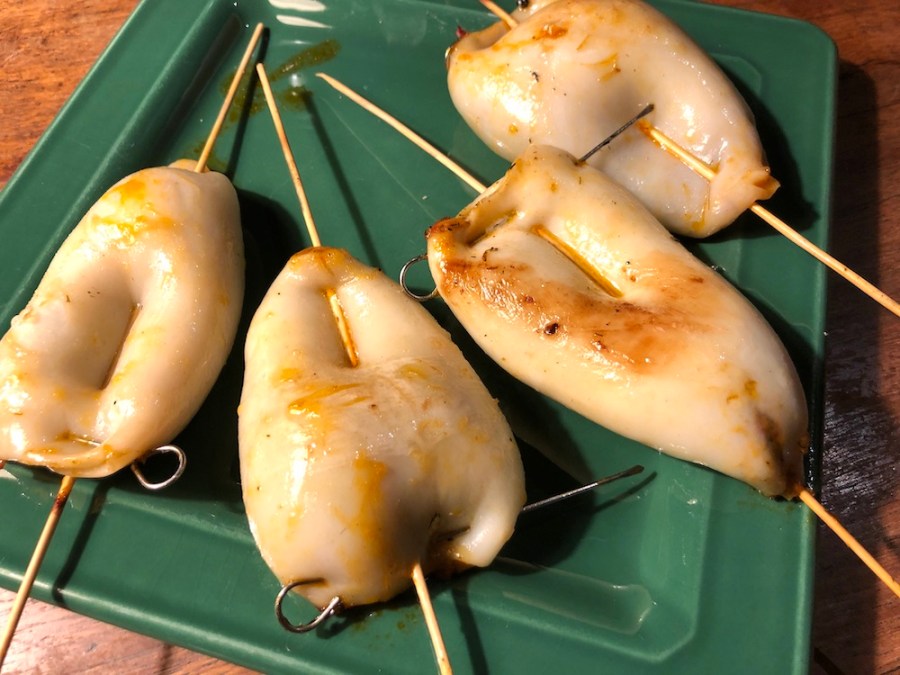
grilled whole squid
A simple recipe to keep whole squid moist and tender. Because squid tentacles cook much faster than the body, here’s a little trick we learned on our travels to the Iberian Peninsula. If you stuff the tentacles into the body they take longer to cook and remain juicy and tender. Make sure to clean the…… Continue reading grilled whole squid

Japanese hand rolls
Here’s a fun hands-on meal that will satisfy meat eaters as well as vegetarians. There’s quite a bit of preparation involved but none of it is time sensitive. When your guests arrive you can sit back and enjoy their company while everyone makes their own delicious meal. The most important ingredient to make is sushi…… Continue reading Japanese hand rolls

pumpkin with coconut custard
This popular Southeast Asian dessert is not too sweet and makes a lovely end to a spicy meal. It looks impressive when it’s cut open at the table too! Preheat your oven to 150ºC (300ºF). You will need a small Japanese pumpkin for this dessert. Wash and dry the pumpkin and cut a hole into…… Continue reading pumpkin with coconut custard
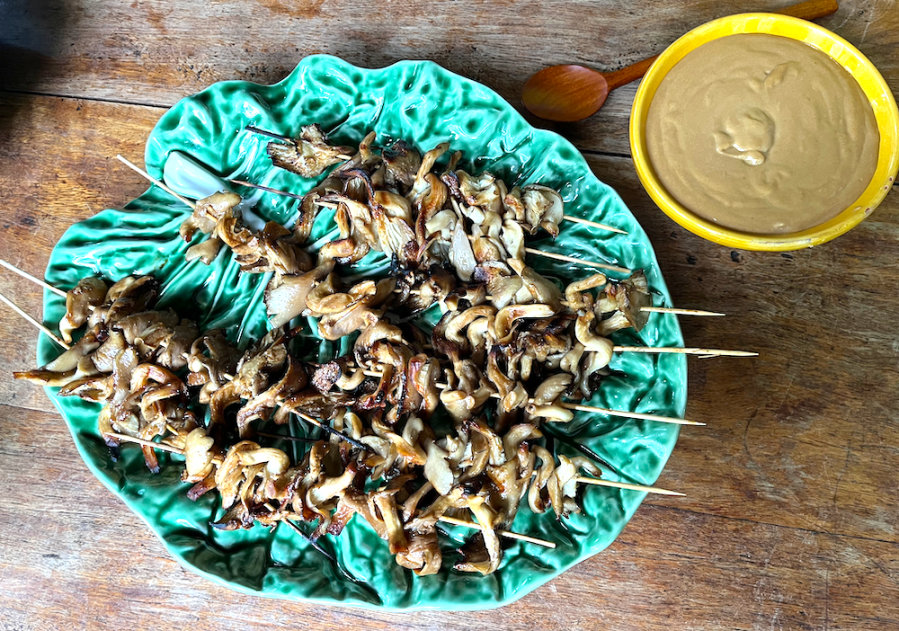
oyster mushroom satay
I love this idea for a vegan dish from a recipe by Simone Wimmer of Kitchen Stories. Substantial and tasty, it looks fabulous too. And we enhanced the flavour even further by cooking over coals. First, soak some bamboo skewers in warm water for 30 minutes. Meanwhile, make the satay dipping sauce. In a small…… Continue reading oyster mushroom satay
 michelle picker cooks